




 홈
오피니언
홈
오피니언
[뉴스비타민=편집부]
입양인의 친생 정보 접근권이나 뿌리를 찾을 권리에 대한 발언을 일부만 떼어 놓고 보면, 재혼 가정이나 현재의 가족을 흔들려는 시도로 오해하는 시선도 존재한다. 그러나 이 논쟁의 본질은 가정을 파괴하는 데 있지 않다. 오히려 오랫동안 외면되어 온 사회적 책임을 이제야 마주하자는 데 있다.
입양특례법은 제정 초기부터 국가와 제도, 그리고 어른들의 편의에 맞춰 설계된 법이었다. 아동은 보호의 주체가 아니라 관리와 조정의 대상에 가까웠다. 1980년대 대한민국에서 해외입양은 아동 복지를 위한 최후의 선택이기보다, 국가 경제와 사회 구조를 유지하기 위한 정책적 수단으로 작동했다. 그 과정에서 아이들의 권리와 목소리는 쉽게 배제되었다.
아이를 떠나보낸 부모는 시간이 지나 새로운 삶을 꾸릴 수 있었을지도 모른다. 그러나 해외로 보내진 아이들은 자신의 언어와 이름, 출생의 맥락을 모른 채 성장했다. 입양은 단 한 번의 사건이 아니라, 평생을 따라다니는 경험이다. 버려졌다는 감각은 시간이 흐른다고 사라지지 않는다. 그것은 형태를 바꾸어 마음 깊숙이 남는다.
그래서 묻게 된다. 과연 누구의 삶이 더 보호받아야 하는가. 현재의 안정을 지키기 위해, 누군가는 자신의 존재에 관한 최소한의 질문조차 허락받지 못해도 되는가. 엄마를 보고 싶어하는 사람들 가운데는 단 1분조차 얼굴을 볼 권리를 인정받지 못한 이들도 있다.
당시의 시대적 한계나 어른들의 실수가 있었다 하더라도, 그로 인해 만들어진 비밀은 또 다른 누군가에게 평생 지워지지 않는 상처가 된다. 침묵은 중립적이지 않다. 그것은 누군가를 보호하는 동시에, 다른 누군가를 고립시킨다.
이제는 다른 사회적 풍토가 필요하다. 조용히 손을 내밀 수 있고, 미안하다는 말을 두려움 없이 건넬 수 있는 분위기다. 진정한 사과는 갈등을 확대하지 않는다. 오히려 평화와 화해의 출발점이 된다.
입양은 감추어지는 제도가 아니라, 이해될 수 있는 제도여야 한다. 개방입양은 폭로가 아니라 존중의 방식이다. 그리고 아이를 포기한 부모는 죄인이 아니라는 사실 또한 사회적으로 받아들여질 필요가 있다. 입양인의 권리를 회복하는 일은 누군가를 처벌하기 위한 과정이 아니라, 우리가 어떤 사회가 될 것인가를 묻는 문제이기 때문이다.
|
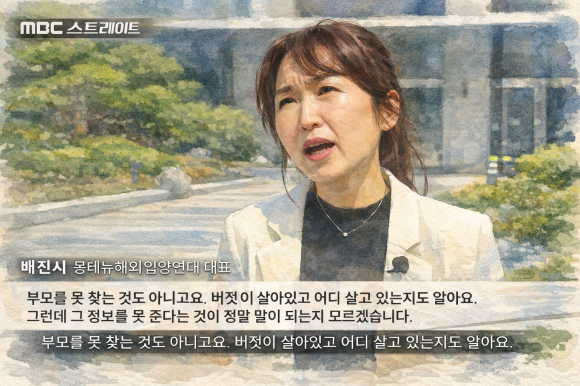
| MBC스트레이트 방송 중 몽테뉴해외입양연대 배진시대표 |
When statements about adoptees’ right to access their biological information or to search for their roots are taken out of context, some perceive them as attempts to disrupt remarried families or unsettle existing households. However, this debate is not about destroying families. It is about confronting a long-avoided social responsibility.
From its inception, the Special Adoption Act was designed to serve the convenience of the state, institutions, and adults. Children were not treated as rights-bearing subjects, but as objects of management and adjustment. In South Korea during the 1980s, international adoption was not primarily implemented as a last resort to protect children, but functioned as a policy tool to sustain the national economy and social structure. In that process, children’s rights and voices were easily sidelined.
Parents who relinquished their children may have been able, over time, to rebuild their lives. The children sent abroad, however, grew up without access to their language, their names, or the context of their birth. Adoption is not a single event; it is an experience that follows a person for life. The sense of abandonment does not simply fade with time. It changes form, buries itself deep within, and remains.
This leads to a fundamental question: whose life deserves greater protection? In order to preserve adult stability, is it acceptable that some people are denied even the most basic questions about their own existence? Among those who long to see their mother, there are people who have not been granted the right to see her face even for a single minute.
Even if there were historical limitations or unavoidable mistakes made by adults, the secrets created in their wake become lifelong wounds for others. Silence is not neutral. It shields some while isolating others.
What is needed now is a different social climate—one in which a hand can be quietly extended, and a simple “I’m sorry” can be spoken without fear. A sincere apology does not escalate conflict; it often marks the beginning of peace and reconciliation.
Adoption should not be a system built on concealment, but one that can be understood. Open adoption is not exposure; it is a form of respect. And it is also necessary for society to accept that parents who relinquished their children are not criminals. Restoring the rights of adoptees is not about punishing anyone—it is about asking what kind of society we choose to become.

;)